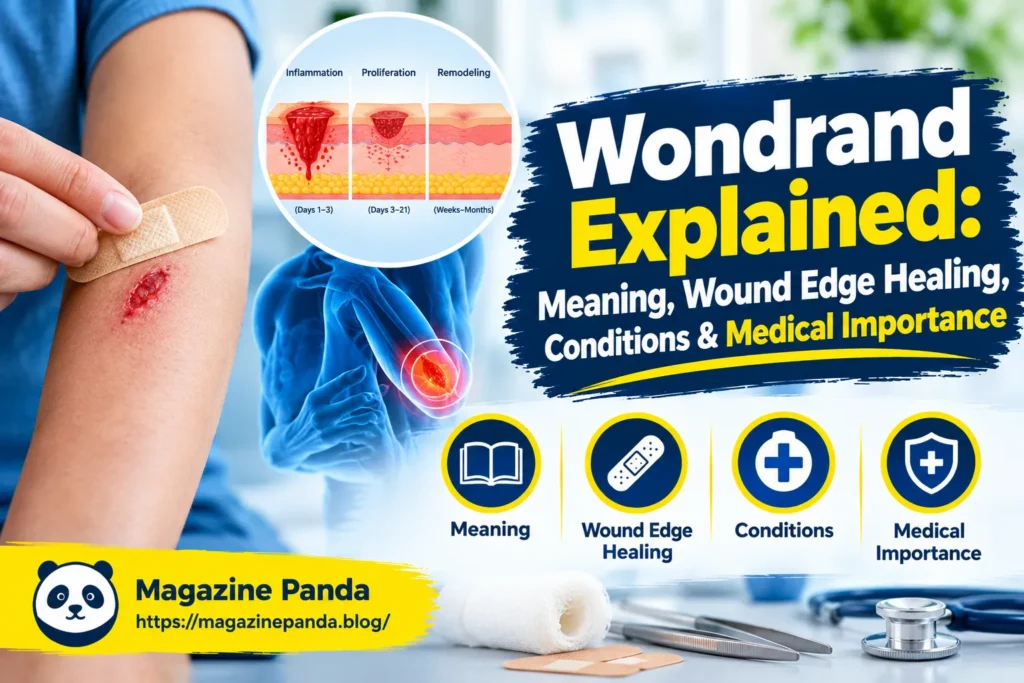

Wound healing involves more than simply closing an injured area of skin. Different tissues work together to repair damage, protect the body, and restore the skin’s natural barrier. One important part of this process is the Wondrand, a term used in Dutch healthcare terminology to describe the edge or margin of a wound. It refers to the boundary where damaged tissue meets the surrounding skin and where new surface cells can develop during healing.
Understanding Wondrand is important when examining surgical wounds, injuries, and chronic skin ulcers. Its appearance can provide useful information about healing progress, moisture problems, irritation, and tissue damage. Healthcare professionals also examine the wound edge when deciding whether an injury is progressing normally or requires further assessment. This guide explains the meaning of Wondrand, its role in wound healing, common wound-edge conditions, clinical assessment methods, and important developments in wound-care guidance during 2026.
What Is Wondrand?
Wondrand is a Dutch medical term that means wound edge or wound margin. It describes the outer boundary of an open wound, where the injured area meets the surrounding skin.
The word consists of two Dutch elements: wond, meaning wound, and rand, meaning edge or border. The corresponding English medical expressions are wound edge and wound margin. In German, the equivalent term is written as Wundrand.
Wondrand is not a disease, medication or medical treatment. It is an anatomical and clinical description used when examining and documenting wounds.
Healthcare professionals pay attention to this area because new epithelial cells can move from the wound margins across the injured surface. This process contributes to the formation of new skin and eventual wound closure.
The appearance of the wound edge can also reveal problems such as excessive moisture, irritation, tissue undermining and delayed healing.
Wondrand in Dutch Medical Terminology
WondRand is also recognized as a specific data element in the Dutch healthcare information model known as nl.zorg.Wond.
The Dutch health information organization publishes structured terminology to help healthcare professionals record and exchange patient information consistently.
Its version 3.6.1 was published on April 17, 2026, as part of the 2026-1 publication.
Within this model, WondRand describes the condition of a wound’s edges. It is identified by the data element NL-CM:19.2.11 and associated with SNOMED CT concept code 449747006.
The model includes several wound-edge findings:
- Epithelialization: Development of new surface skin.
- Skin irritation: Irritation affecting the wound margin or nearby skin.
- Tissue undermining: Separation of tissue beneath the visible wound edge.
- Skin maceration: Softening of skin caused by prolonged moisture exposure.
These terms help clinicians document wound characteristics in a structured way. They are observations used during assessment rather than automatic diagnoses of a particular disease.
This standardized terminology also makes it easier to communicate wound conditions between healthcare professionals and maintain consistent medical records.
Why Is the Wound Edge Important?
The wound edge plays an important role in the final stages of wound closure.
During healing, epithelial cells migrate across the wound surface from the surrounding viable tissue. As these cells advance, they gradually cover the damaged area and help restore the skin barrier.
A healthy healing process often involves gradual movement of the wound margins towards one another. However, the speed of closure depends on several factors, including wound depth, blood supply, infection, moisture balance, and the person’s general health.
Healthcare professionals examine the edge to determine whether epithelialization is occurring and whether the wound is becoming smaller.
A wound that shows little improvement over time may require further investigation. Rolled edges, excessive moisture, tissue undermining and damaged surrounding skin can all interfere with normal healing.
The wound edge should therefore be assessed alongside the wound bed and surrounding skin rather than examined in isolation.
Different Types of Wound Edges
Wound edges can have different appearances depending on the injury, healing stage and underlying health conditions.
Recognizing these differences helps healthcare professionals document changes and identify wounds that may require additional attention.
Advancing Wound Edges
Advancing edges move gradually towards the centre of the wound as new epithelial tissue develops.
This is generally an encouraging finding because it suggests that the wound is progressing towards closure.
Rolled Wound Edges
Rolled edges, also called epibole, occur when the wound margin becomes raised, rounded, or turned inward.
This appearance is often associated with chronic wounds that are not closing normally. The rolled tissue can interfere with epithelial cells moving across the wound surface.
Macerated Wound Edges
Maceration develops when skin remains exposed to excessive moisture for an extended period.
The affected area may look pale, white, soft, or wrinkled. It can become fragile and more vulnerable to further damage.
Undermined Wound Edges
Undermining occurs when tissue beneath the visible wound margin separates from the surrounding tissue.
This creates a pocket beneath the skin surface. The actual extent of tissue damage may therefore be greater than the visible opening suggests.
Irritated Wound Edges
Irritation can develop around the wound because of moisture, friction, dressing materials or adhesive sensitivity.
The affected skin may appear inflamed, uncomfortable or damaged.
| Wound-edge condition | Common appearance |
| Advancing | New skin developing towards the centre |
| Rolled | Raised or rounded margins |
| Macerated | Soft, pale or wrinkled skin |
| Undermined | Tissue separation beneath the edge |
| Irritated | Sensitive or inflamed surrounding skin |
These observations are useful for clinical documentation, but appearance alone cannot establish the cause of a wound problem.
How Does Wondrand Change During Wound Healing?
Wound healing is a biological process involving several overlapping stages. The wound edge participates particularly in the repair process, when new surface tissue develops and gradually covers the injured area.
Hemostasis
The first response begins immediately after an injury. Blood vessels constrict, platelets collect, and a clot forms to control bleeding.
This temporary barrier helps protect the damaged area while the body begins its repair process.
Inflammation
During the inflammatory stage, immune cells move into the injured area to remove damaged tissue and help control microorganisms.
Some redness, warmth, swelling, and tenderness can occur during this stage. However, worsening symptoms or signs of infection require appropriate assessment.
Proliferation
The proliferation stage involves the development of new tissue, blood vessels and epithelial cells.
Granulation tissue fills the wound, while epithelial cells migrate from the wound margins to cover the surface.
This stage is particularly important for Wondrand because the advancing edge contributes directly to wound closure.
Remodeling
During remodeling, collagen fibers reorganize, and the repaired tissue gradually strengthens.
The wound may appear closed, but the newly formed tissue can remain weaker than uninjured skin for an extended period.
The duration of each stage varies depending on the wound and the person’s health. These stages should not be treated as a fixed timetable for every injury.
What Is the TIME Wound Assessment Framework?
The TIME framework is a structured clinical approach used to assess important wound characteristics.
It helps healthcare professionals examine different aspects of a wound rather than focusing only on its visible size.
TIME stands for:
T – Tissue
This involves examining the tissue inside the wound. Clinicians may identify healthy granulation tissue, slough, or non-viable tissue.
I – Infection or Inflammation
The assessment considers possible signs of infection or excessive inflammation, including increasing pain, swelling, warmth, discharge, and changes in the surrounding skin.
M – Moisture
This examines wound fluid, commonly called exudate, and whether the moisture level is appropriate for healing.
Too much moisture can damage surrounding skin, while excessive dryness can interfere with cell migration.
E – Edge
The final component focuses on the wound margin. Healthcare professionals examine whether the edges are advancing, remaining unchanged or becoming rolled.
The TIME framework is useful because it brings together tissue condition, infection, moisture, and wound-edge progression.
The Royal College of Nursing discussed this approach in its March 17, 2026, wound-assessment guidance, recommending reassessment and documentation of wound characteristics at dressing changes.
What Is Wound-Edge Maceration?
Wound-edge maceration is a condition in which the skin around an injury becomes excessively soft because of prolonged contact with moisture.
Wound drainage is a common contributing factor. When fluid repeatedly collects around the wound, it can weaken the skin barrier and make the affected tissue more vulnerable to damage.
Common signs include:
- Pale or whitish skin around the wound.
- Soft or soggy tissue.
- Wrinkled skin.
- Fragile wound margins.
- Increased sensitivity.
- Skin breakdown around the injured area.
Maceration is not necessarily a sign of infection. It is primarily associated with excessive moisture exposure, although damaged skin may become more vulnerable to additional complications.
Clinical assessment considers the amount of wound drainage, the condition of surrounding skin and whether the current dressing provides suitable moisture management.
What Are Rolled Wound Edges?
Rolled wound edges are clinically known as epibole.
This condition occurs when the wound margins become rounded or curled rather than advancing across the wound surface.
It is commonly associated with chronic or hard-to-heal wounds.
One concern is that the altered edge can interfere with the normal migration of epithelial cells. As a result, the wound may remain open even when other parts of the healing process are occurring.
Rolled edges should be assessed by a trained healthcare professional who can investigate the underlying cause and determine appropriate wound management.
Patients should never attempt to cut, scrape or remove this tissue themselves.
What Is Tissue Undermining?
Tissue undermining occurs when damaged tissue extends underneath the visible wound margin.
Instead of forming a straightforward opening, the injury creates a space or pocket beneath the surrounding skin.
This can make the wound appear smaller on the surface than it actually is.
Healthcare professionals may assess the location, depth and extent of undermining when documenting the wound.
Undermining can occur in chronic wounds and certain pressure injuries. It is an important finding because it may indicate deeper tissue damage and influence the clinical management plan.
The Dutch WondRand terminology list recognizes tissue undermining as one of the wound-edge conditions used in structured documentation.
Wondrand vs Periwound Skin
periwound skin and Wondrand are closely related terms, but they describe different anatomical areas.
Wondrand refers to the immediate edge or margin of an open wound.
Periwound skin refers to the surrounding skin outside the wound itself.
Both areas require attention during wound assessment.
For example, epithelialization is observed at the wound edge, while dryness, irritation, and moisture-related damage may affect the surrounding skin.
Excessive wound drainage can cause maceration in the periwound area, potentially damaging the skin that supports wound healing.
Understanding this distinction helps healthcare professionals document findings more accurately.
How Do Healthcare Professionals Assess Wondrand?
Wound-edge assessment is usually part of a complete wound examination.
Healthcare professionals consider the wound’s appearance, dimensions, drainage, surrounding skin, and the patient’s general health.
Important assessment points include:
Epithelialization: Whether new surface tissue is developing along the margins.
Edge Advancement: Whether the wound is gradually becoming smaller.
Rolled Margins: Whether the edges are raised or curled.
Maceration: Whether excessive moisture has softened the surrounding tissue.
Undermining: Whether tissue separation exists beneath the visible margin.
Skin Irritation: Whether the surrounding area shows inflammation or damage.
Wound Measurements: Whether the wound’s length, width, and depth are changing over time.
The Royal College of Nursing’s 2026 guidance recommends recording wound size, tissue type, exudate, infection status and edge condition during reassessment.
Photographs may also help monitor progress when appropriate consent has been obtained, and local clinical procedures permit their use.
What Affects Wound-Edge Healing?
Several factors influence how quickly the wound margin progresses towards closure.
Blood Circulation
Healthy blood circulation delivers oxygen and nutrients needed for tissue repair. Reduced circulation can delay healing, particularly in people with vascular disease.
Diabetes
Diabetes can affect circulation, immune function, and nerve sensation. These changes may increase the risk of delayed healing and unnoticed injuries.
Infection
An infection can interfere with normal tissue repair and contribute to increased inflammation and wound deterioration.
Moisture Imbalance
Excessive moisture can cause maceration, while a wound that becomes too dry may also experience impaired healing.
Nutrition
Protein, energy, vitamins, and adequate hydration support the biological processes involved in tissue repair.
Smoking
Smoking can negatively affect blood circulation and oxygen delivery, making wound healing more difficult.
Medication and General Health
Certain medicines and medical conditions can influence the body’s ability to repair damaged tissue.
For this reason, wound management should consider the person’s overall health rather than focusing only on the appearance of the wound.
Latest Wound-Care Guidelines and Developments in 2026
Several important clinical publications in 2026 have reinforced the importance of assessing wound edges as part of comprehensive wound management.
Dutch Wound Information Model v3.6.1
The Dutch healthcare information model nl.zorg.Wond version 3.6.1 was published on April 17, 2026, as part of the 2026-1 publication.
It includes WondRand as a separate data element for recording the condition of wound edges.
The model also provides terminology for epithelialization, skin irritation, tissue undermining, and skin maceration.
This is particularly useful for standardized healthcare documentation and information exchange.
Royal College of Nursing Guidance
On March 17, 2026, the Royal College of Nursing published guidance explaining how to perform a simple wound assessment.
It emphasizes the TIME framework, including the examination of advancing, unchanged and rolled wound edges.
The guidance also highlights the importance of reassessment and documentation during dressing changes.
International Pressure Injury Guidelines, Fourth Edition
In September 2026, the National Pressure Injury Advisory Panel, European Pressure Ulcer Advisory Panel and Pan Pacific Pressure Injury Alliance published the fourth edition of their international pressure-injury guideline.
Its treatment recommendations include cleansing the wound bed, wound edge and surrounding skin, managing infection, maintaining an appropriate healing environment and considering wound-edge restoration when needed.
These recommendations specifically concern pressure injuries and should not automatically be applied to every type of wound.
VA/DoD Clinical Practice Guideline 2026
The US Department of Veterans Affairs and Department of Defense also published updated pressure-injury guidance in August 2026.
The document discusses the TIMERS framework, which expands on TIME by adding Repairs/Regeneration and Social/Patient-related factors.
This broader approach recognizes that wound healing involves not only the physical wound but also the patient’s health, circumstances, and ability to participate in care.
Together, these developments reinforce the importance of consistent wound assessment and individualized treatment.
When Should a Wound Edge Be Medically Assessed?
Not every change in wound appearance indicates a serious problem. However, certain symptoms require professional attention.
Seek medical advice if a wound develops:
- Increasing redness or swelling.
- Worsening pain or tenderness.
- Increasing warmth around the injured area.
- Pus or an unusual change in drainage.
- New or worsening skin damage.
- A wound that repeatedly opens.
- A wound that is not healing as expected.
Fever, rapidly spreading redness, or feeling seriously unwell may indicate a more serious infection and require urgent medical assessment.
People with diabetes, poor circulation, or weakened immune systems should seek professional advice early when a wound develops or changes.
A wound’s appearance alone cannot confirm infection or determine the correct treatment.
Final Wordings
Wondrand is an important medical term describing the edge of a wound, where injured tissue meets the surrounding skin.
Its condition provides useful information about epithelialization, wound closure, moisture balance, irritation, and deeper tissue problems.
The TIME framework gives healthcare professionals a structured way to assess the wound edge alongside tissue condition, infection and moisture. The latest 2026 Dutch healthcare information model also recognizes WondRand as a distinct data element for standardized wound documentation.
New clinical guidance published in 2026 further emphasizes the importance of examining wound margins and monitoring changes throughout treatment.
Although wound-edge appearance can provide valuable information, it should never be interpreted in isolation. A complete clinical assessment considers the wound itself, surrounding skin, and the patient’s overall health.
Understanding Wondrand helps make wound-care terminology easier to interpret and explains why this small anatomical area plays an important role in the healing process.
Frequently Asked Questions
1. What does Wondrand mean?
Wondrand is a Dutch medical term meaning wound edge or wound margin. It describes the boundary where an injured area meets the surrounding skin.
2. Is Wondrand a medical condition?
No. Wondrand is an anatomical and clinical term, not a disease, medication or treatment.
3. What is the English word for Wondrand?
The English equivalents are wound edge and wound margin. The German equivalent is Wundrand.
4. Why is the wound edge important?
The wound edge is important because epithelial cells migrate from the surrounding viable tissue to cover the injured surface. Its appearance can help clinicians assess healing progress.
5. What are the common types of wound-edge conditions?
Common findings include epithelialization, skin irritation, maceration, tissue undermining, and rolled wound edges.
6. What does a rolled wound edge mean?
A rolled wound edge, known as epibole, occurs when the wound margin becomes rounded or curled. It can interfere with normal epithelial migration and is often associated with delayed healing.
7. What is wound-edge maceration?
Maceration occurs when skin remains exposed to excessive moisture for too long. It can become soft, pale, wrinkled, and more vulnerable to damage.
8. What does WondRand mean in Dutch healthcare records?
WondRand is a structured data element in the Dutch nl. zorg.Wond information model. It records the condition of wound edges and is associated with SNOMED CT code 449747006.
9. What is the TIME framework in wound care?
TIME stands for Tissue, Infection/Inflammation, Moisture, and Edge. It is a structured framework used to assess wound characteristics and support clinical decision-making.
10. When should a healthcare professional check a wound edge?
A healthcare professional should assess a wound if it develops increasing pain, swelling, redness, unusual drainage, tissue damage, or delayed healing. Fever or rapidly spreading redness requires urgent assessment.
Continue Exploring Our Latest Article: MagazinePanda