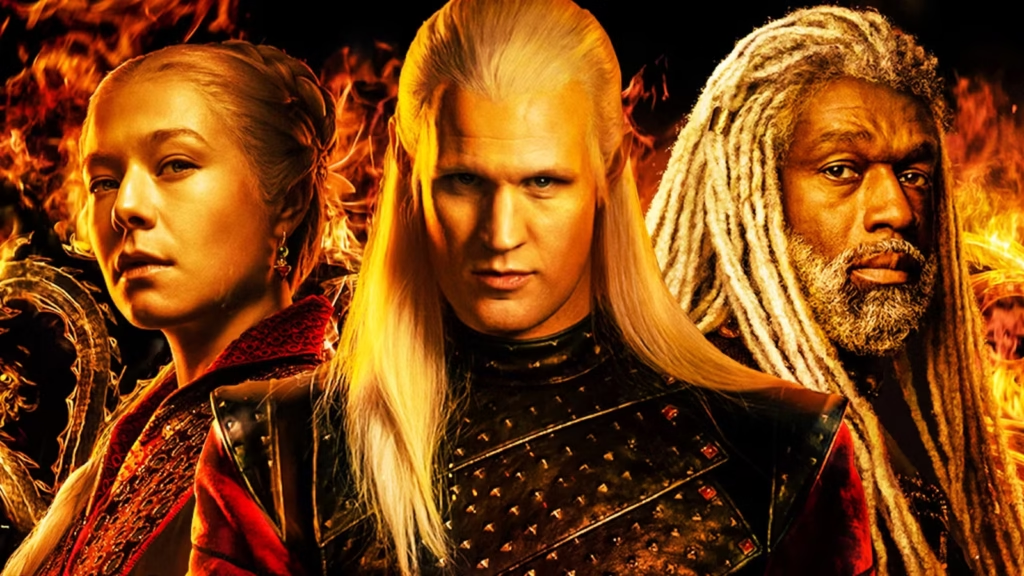

Few fictional families have generated as much lasting obsession as House Targaryen. Years after the source material first aired, fans are still mapping out marriages, successions, and civil wars in obsessive detail. A clear Targaryen family tree remains one of the most consistently searched references in the entire fantasy genre, proof that audiences still want to understand exactly how this dynasty fits together.
That staying power says something about what makes fictional dynasties compelling in the first place, and the Targaryens are a near-perfect case study.
Why Audiences Stay Hooked on Dynastic Drama
Succession stories hit a nerve because the stakes are both personal and political at once. Every marriage, every birth, every death carries weight beyond the individual character, it reshapes who has a claim to power. That’s a formula that’s worked since Shakespeare, and the Targaryens are simply one of the more elaborate modern versions of it, stretched across centuries of in-universe history.
Rhaegar Targaryen: The Character Fans Still Argue About
Few figures in the saga generate as much ongoing debate as Rhaegar Targaryen. Thoughtful, musically inclined, and ultimately responsible for a chain of events that reshaped the entire story, Rhaegar occupies that rare space in fiction where fans genuinely disagree on whether he’s sympathetic or reckless. That ambiguity is a big part of why his storyline keeps resurfacing in fan discussions years later.
What Makes a Fictional Family Tree Worth Mapping Out
Not every fictional family earns this level of attention. The ones that do tend to share a few traits: enough generations to create real complexity, enough secrecy or scandal to make the reveals land, and consequences that ripple forward rather than resetting with each new character. Targaryen history checks every one of those boxes, which is exactly why fan-built reference material around it keeps getting revisited.
How Fan Communities Keep This Kind of Lore Alive
A huge part of why a fictional dynasty survives in the public consciousness comes down to the fans themselves. Long after a show wraps or a book series concludes, communities keep producing explainer threads, timeline breakdowns, and debate posts that pull new readers in. This is especially true for stories with complicated internal chronology, where a confused newcomer can go from lost to genuinely invested in the time it takes to read one well-organized guide.
It’s a self-reinforcing cycle: good reference material lowers the barrier to entry, more people get invested, and that larger audience produces even more reference material. Few fictional families illustrate that cycle as clearly as the Targaryens, where new fans are still being onboarded years after the original material concluded.
Where This Fits Into the Bigger Pop Culture Picture
Fictional dynasties like this one say something real about audience appetite right now. Long-form, interconnected storytelling, the kind that rewards close attention over years, continues to outperform standalone stories in terms of sustained fan engagement. It’s exactly the kind of entertainment trend worth tracking alongside the other entertainment and lifestyle coverage on this site if you’re following where fandom culture is headed next.
• Dynastic storylines succeed when consequences carry across generations, not just episodes.
• Ambiguous characters like Rhaegar generate more lasting discussion than clearly good or bad ones.
• Clear reference material is a major reason some fictional universes retain fans long-term.
• Long-form, interconnected storytelling continues to drive the deepest fan engagement.
A Dynasty That Keeps Finding New Fans
What’s notable is how little of this momentum depends on new official material. Most of the ongoing interest is fan-driven, built on existing source content revisited through fresh eyes, new reference tools, and renewed debate. That kind of organic, community-powered longevity is rare, and it’s part of why the Targaryen story keeps showing up in pop culture conversations well beyond its original release window.
Frequently Asked Questions
Why do fans still care about the Targaryen family tree years later?
The story’s complexity rewards repeat engagement, and a clear reference makes it easier for both longtime fans and newcomers to follow the full scope of the family’s history.
Is Rhaegar Targaryen considered a hero or a villain?
Neither, consistently. Most fan interpretations land somewhere in between, which is a big part of why his character remains a popular discussion topic.
What makes a fictional dynasty compelling to follow?
Generational consequences, believable motivations, and enough ambiguity that audiences can disagree about who was right.
Why has long-form fantasy storytelling stayed so popular?
It rewards sustained attention in a way episodic content often doesn’t, which keeps audiences invested well beyond a single viewing.
Read More From Magazinepanda