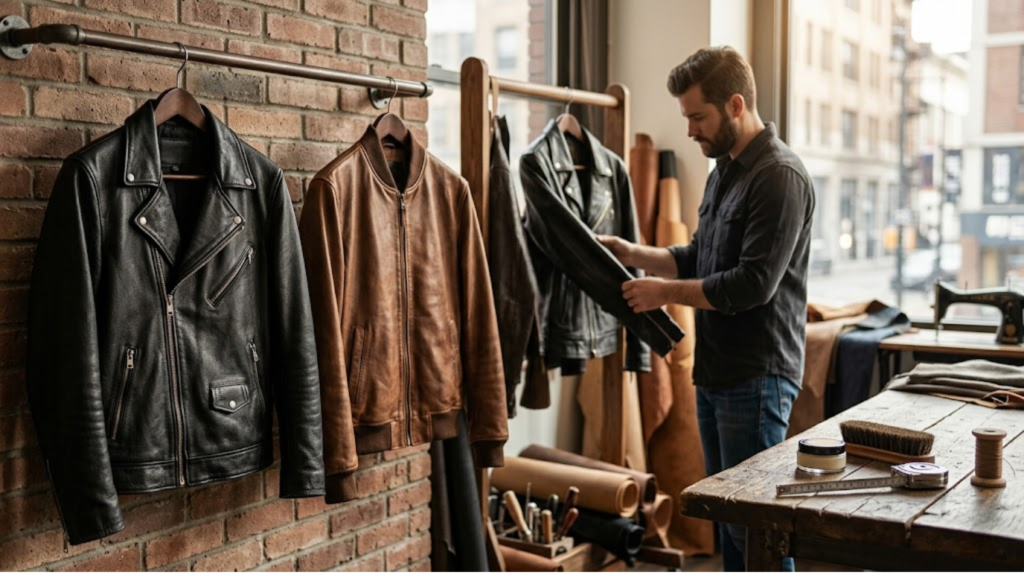

Most clothing is built to last a few seasons. A good leather jacket is different. Bought well, it can stay in a man’s wardrobe for decades, softening and darkening with every year of wear. Many of the most loved jackets look better at twenty years old than they did on the first day.
That kind of longevity doesn’t happen by accident. It depends on the leather, the construction, the fit and how the jacket is cared for. Understanding those factors before buying turns a big purchase into a long-term investment rather than an expensive mistake.
Why Leather Ages Differently
Fabric usually wears out. Leather, when it’s good quality, wears in. Over time it molds to the shoulders and elbows of the person wearing it, picks up creases in the places they naturally move, and develops a patina, the gentle change in color and sheen that comes from use, light and handling.
This is why two identical jackets can look completely different after ten years. Each one tells the story of its owner. It’s also why buying a cheap jacket and replacing it often rarely saves money. Lower-grade leather tends to crack, peel or stiffen instead of aging gracefully.
Know Your Leathers
Different hides behave differently, and each suits a different style of jacket.
Cowhide is thick, tough and protective. It takes longer to break in but holds up extremely well, which makes it a common choice for rugged, structured jackets.
Lambskin is light, soft and smooth from the start. It drapes beautifully and feels refined, but it’s more delicate and can scuff more easily.
Goatskin sits between the two, with a pebbled grain, good durability and a comfortable weight.
Suede has a soft, brushed surface with a relaxed, textured look. It needs more care around water and stains.
The finish matters as well. Leather that keeps more of its natural surface usually develops a richer patina than leather coated heavily to look uniform.
Construction Tells The Story
Two jackets made from similar leather can differ enormously in how long they last. Construction is where quality shows.
Look at the stitching first. It should be even, tight and consistent along the seams, with no loose threads. Check the hardware, especially zippers and snaps, since these take daily strain and are often the first parts to fail on lesser jackets. Look inside at the lining and how neatly it’s attached. Heavier seams at stress points such as the shoulders, armholes and pockets help the jacket hold up through years of reaching, lifting and moving.
Small-batch and hand-finished jackets often show this care in the details. When fewer pieces are made at once, each one tends to get more attention from the people who build it.
Bespoke, Made-To-Measure Or Ready-To-Wear
Leather jackets are usually sold in three ways, and each offers a different balance of cost, time and fit.
Ready-to-wear jackets come in standard sizes and can be worn right away. They suit men whose proportions match typical sizing well.
Made-to-measure jackets start from an existing pattern and adjust it to your measurements, such as sleeve length or body width. It’s a middle ground that gives a better fit without starting from scratch.
Bespoke jackets are built from a pattern created for one person. The process takes longer and usually involves multiple fittings, but the result is a jacket shaped around the wearer’s own posture and frame.
Leather is less forgiving to alter than wool, which makes fit at the point of purchase especially important. A tailor can adjust a suit jacket fairly easily; reshaping leather is harder and sometimes impossible.
Getting The Fit Right
A leather jacket should feel snug at first, since it will relax slightly with wear. A few checks help:
The shoulder seams should sit at the edge of your shoulders.
Sleeves should reach your wrist bone with arms at your sides.
You should be able to reach forward without the back pulling tight.
The jacket should close comfortably over the layer you’ll usually wear beneath it.
The hem should sit at or just below the belt line for most classic styles.
Try the jacket with the kind of clothing you’ll actually wear it over, whether that’s a T-shirt or a heavier knit.
Beyond The Classic Jacket
Leather menswear has grown well beyond the motorcycle jacket. Leather shirts and shirt-jackets, lighter and more relaxed than outerwear, now work as a layer over a T-shirt or under a coat. its boots and small accessories, built with the same craft, complete the look.
Many men searching phrases like savas clothing are looking for exactly this mix of old-world craft and modern, rock-inspired style. Whatever the label, the same rules apply: quality leather, careful construction and a fit that feels made for you.
Caring For Leather
Good care keeps a jacket looking its best for decades. Hang it on a wide, padded hanger so the shoulders keep their shape. Store it somewhere cool and dry, away from direct sunlight and heaters. Avoid plastic covers, which trap moisture; a breathable cloth cover works better.
If the jacket gets wet, let it dry naturally at room temperature, never next to a radiator. Condition the leather once or twice a year, or when it starts to feel dry, using a product suited to the type of leather. For suede, a soft brush and a protective spray help. For deep stains or repairs, a professional leather specialist is the safest choice.
A Jacket That Grows With You
A leather jacket isn’t a seasonal trend. Chosen with care and looked after properly, it becomes one of the few pieces of clothing that improves with age. The scuffs, creases and softened edges it collects over the years are part of what makes it yours. Buy it once, buy it well, and it may outlast almost everything else in the closet.
Read More From Magazinepanda