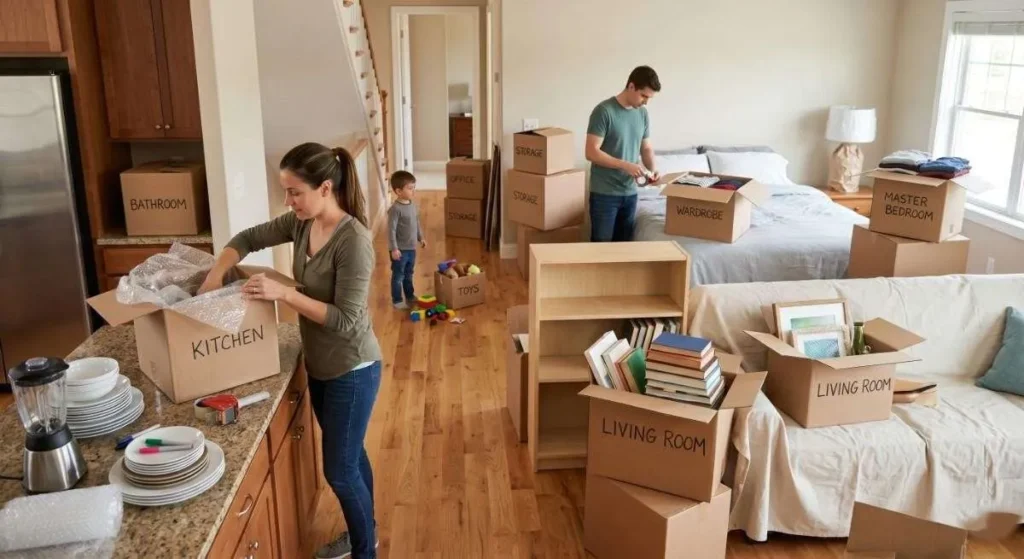

Many people underestimate packing. They assume it will take a weekend, then find themselves at midnight on moving eve, surrounded by half-filled boxes and wondering where all this stuff came from.
Packing takes longer than almost anything else on the moving checklist. It also decides whether your belongings arrive in one piece. A little planning up front saves hours later and prevents most of the damage that happens in transit.
This guide covers how to start, what to pack first, how to protect fragile items, and how to decide whether you need extra hands.
Start Earlier Than Feels Necessary
The biggest packing mistake is waiting. Four to six weeks before a move feels too early, but it gives you room to work in small sessions instead of one exhausting marathon.
Begin with a walk through your home. Look in the closets, the garage, the attic, and the corners where things collect. Most households hold far more than their owners realize, and you want to know what you’re dealing with before you buy a single box.
Then make a rough timeline. Work backward from moving day and assign each area of the home a week. Keep the last few days free for last-minute items, cleaning, and the things you use daily.
Declutter Before You Pack
Every item you pack costs you time, boxes, and effort on both ends of the move. So this is the moment to ask what you actually need.
Go through each room and sort things into three groups: keep, donate or sell, and throw away. Be honest about clothes that don’t fit, kitchen gadgets you’ve used once, and boxes you haven’t opened since your last move. If you haven’t touched something in a year, it probably doesn’t need a seat in the truck.
Decluttering also gives you a more accurate count of what’s left. That helps you buy the right amount of supplies and, if you hire movers, get a more accurate estimate.
Gather the Right Supplies
Good supplies make the work faster and protect your belongings. Running out of tape halfway through the kitchen is more annoying than it sounds.
Here is a basic kit most households need:
- Boxes in small, medium, and large sizes
- Heavy-duty packing tape and a tape dispenser
- Packing paper for wrapping dishes and fragile items
- Bubble wrap for glassware, frames, and electronics
- Permanent markers and labels
- Wardrobe boxes for hanging clothes
- Mattress bags and furniture pads
- Scissors or a box cutter
A few supplies are easy to forget. Zip-top bags hold screws and small hardware. Stretch wrap keeps drawers closed and cushions together. Colored stickers help with room coding.
Plastic bin rentals are another option, especially for shorter moves. Bins don’t collapse in the rain, they stack well, and there’s no cardboard to break down afterward.
Use a Simple Packing Order
Work from the least-used rooms to the most-used rooms. That way your daily routine stays intact for as long as possible.
Start With Storage Areas and Rarely Used Rooms
Attics, basements, garages, and guest rooms are good places to begin. They hold seasonal decorations, tools, sports gear, and extra linens, none of which you’ll miss this week.
Garages need extra care. Drain fuel from lawn equipment, tape tool blades, and don’t pack flammable liquids. Most moving companies won’t transport them, so ask about the rules early.
Move On to Decor and Books
Next, take down wall art, mirrors, and shelf decor. Wrap framed pieces in packing paper and place them upright in boxes, like records in a crate. Don’t stack them flat.
Books are heavy, so pack them in small boxes. A large box full of books can be hard to lift and may break the bottom of the carton. Fill leftover space with soft items, such as towels, so nothing shifts.
Tackle the Kitchen in Stages
The kitchen is usually the slowest room. It has hundreds of small, breakable things, and each one needs its own wrapping.
Pack the items you rarely use first: specialty cookware, extra serving dishes, and holiday platters. Keep a basic set of plates, cups, and utensils out until the last day or two.
When you wrap dishes, use a generous layer of packing paper around each piece. Stand plates on their edges rather than stacking them flat, because they hold up better against bumps. Put heavier items on the bottom of the box and lighter ones on top. Fill any gaps so nothing can rattle.
Bedrooms and Closets
Clothes are easier than they look. Hanging items can go straight into wardrobe boxes, which keeps them wrinkle-free and saves you from refolding everything. For dresser drawers, check whether they can stay filled. Light clothing can often remain in place if the drawers are lined and secured.
Pack bedding last, since you’ll need it until the final night. Put a set of sheets and a pillow in a separate bag so your first night in the new place is easy.
Protect Fragile and High-Value Items
Some things deserve extra attention: glassware, artwork, mirrors, collectibles, and electronics. These are also the items people tend to regret rushing.
For fragile pieces, follow a few basic rules:
- Wrap each item individually, not in bundles.
- Add a cushioning layer at the bottom of the box.
- Pack tightly enough that nothing moves when you gently shake the box.
- Mark the box “fragile” on the top and at least two sides.
- Place fragile boxes on top of heavier ones in the truck.
For electronics, use the original boxes if you still have them. If you don’t, wrap the device in a soft cloth, then in bubble wrap, and take a quick photo of the cable setup behind it before you unplug anything. That photo will save you a frustrating evening later.
Keep truly valuable or irreplaceable things with you. Jewelry, passports, important documents, and family keepsakes should travel in your own vehicle.
Label Everything Like a Stranger Will Read It
Labeling feels tedious in the moment, but it pays off on moving day. A good label tells whoever is carrying the box where it goes and tells you what’s inside.
Write the room name and a short description on the top and at least one side of every box. “Kitchen: pots and pans” beats “misc.” by a mile. You can also number your boxes and keep a simple list of what’s in each one.
Some people color-code rooms with stickers. Blue for the kitchen, green for the bathroom, yellow for the living room. It’s quick, and movers can place boxes in the right rooms without asking.
Finally, set aside an “open first” box. Pack it with toilet paper, phone chargers, basic tools, medications, snacks, a few dishes, and anything else you’ll want in the first twenty-four hours. Move it yourself if you can.
Know When to Get Help
Plenty of people pack on their own and do a fine job. But there are times when doing it all yourself costs more than it saves.
Consider outside help if:
- You have a tight deadline or a short move date.
- You’re moving a large home with many rooms.
- You have a lot of fragile or high-value items.
- Health, age, or a busy work schedule makes heavy lifting difficult.
- You’re managing a move alongside kids, caregiving, or a job.
Help doesn’t have to mean handing over the whole house. Many people hire a crew for one overwhelming room, such as the kitchen or garage, and pack the rest themselves. Others want everything done so they can focus on closing paperwork, school transfers, and utilities.
Families who want professional help with packing can find it from local moving companies, and some offer full-home or partial-room packing and bring their own supplies. Asking what’s included, such as materials, labeling, and wardrobe boxes, will help you compare options fairly.
Whatever route you choose, ask for a written estimate and confirm what’s covered before moving day. Clear expectations prevent surprises.
Common Packing Mistakes to Avoid
Even careful movers run into the same few problems. Knowing them ahead of time makes them easy to sidestep.
Overpacking boxes. A box that’s too heavy is hard to carry and more likely to break. Keep heavy items in small boxes and light items in large ones.
Underpacking boxes. The opposite problem is just as common. A half-empty box can crush under the weight of the ones above it. Fill the empty space with paper or soft items.
Using weak or reused boxes. Old boxes lose strength, especially if they’ve been wet. Sturdy, properly sealed cartons matter for anything heavy or breakable.
Mixing rooms in one box. It seems efficient until you’re hunting for a single item. Keep each box to one room whenever possible.
Skipping the essentials bag. Without one, your first night can turn into a scavenger hunt for toothbrushes and phone chargers.
Leaving packing to the final week. Rushing leads to sloppy wrapping, missed items, and broken things.
Plan for the Final Days
In the last few days, take care of the loose ends. Defrost the freezer, empty and clean the fridge, and pack the last of your kitchen items. Disassemble furniture if needed, and keep hardware in labeled bags taped to the piece.
Do one last walk-through of every room, including closets, cabinets, the garage, and the attic. Check the back of doors and the corners of shelves. It’s amazing how many things hide in plain sight.
On moving day, keep your essentials bag, important documents, and valuables with you. Be available to answer questions from the crew, and take a quick photo of the empty home once it’s cleared.
Final Thoughts
Packing is a project, not a single task. Starting early, decluttering first, working room by room, and protecting the items that matter most will remove most of the stress.
Keep a few takeaways in mind:
- Begin four to six weeks ahead, and pack the least-used rooms first.
- Declutter before you pack so you carry less.
- Use sturdy boxes and good wrapping materials, especially for fragile items.
- Label every box by room and contents.
- Pack an “open first” bag for the first night.
- Get help for the parts that feel too big, whether that’s one room or the whole house.
A move will never be effortless, but with a plan, you can arrive at your new home with your belongings intact and your energy left over to enjoy it.
Read More From Magazinepanda