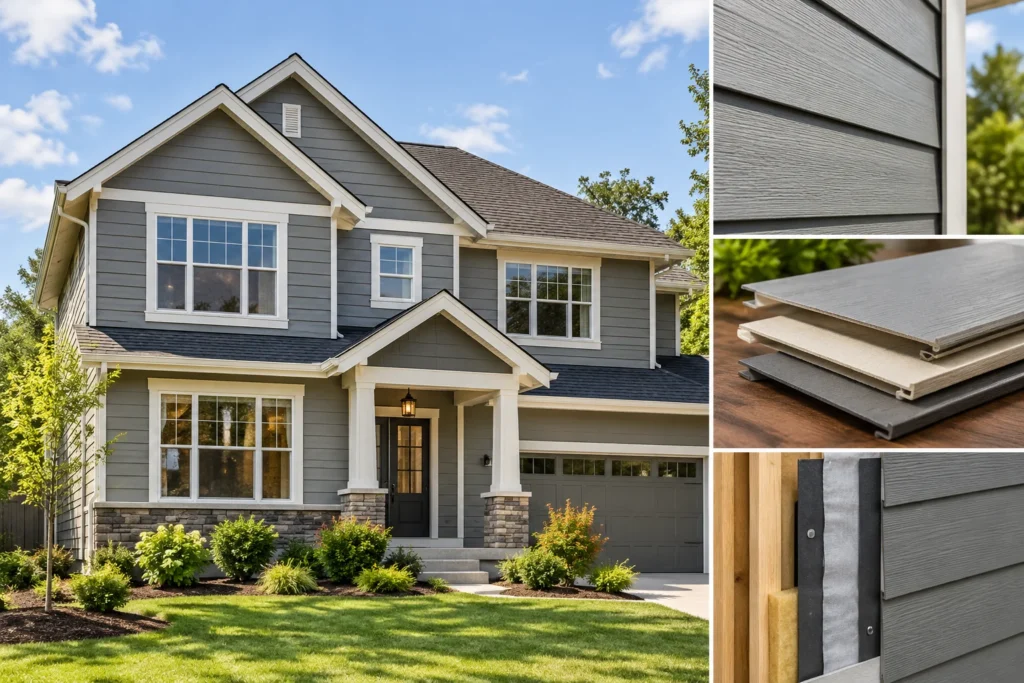

Choosing exterior siding is a significant decision because the material has to handle rain, sunlight, wind, temperature changes and everyday wear while also contributing to the appearance of the house. Among the available options, fiber cement siding has become a popular choice for homeowners looking for a durable alternative to traditional wood and vinyl.
Fiber cement is made from a mixture that generally includes cement, sand and cellulose fibers. The result is a rigid exterior material that can be manufactured in different profiles and finishes. Current 2026 cost guides place material prices around $5 to $14 per square foot, with labor commonly adding another $2 to $8 per square foot, although actual project prices vary by home, location, product and installation requirements.
Quick Information
| Quick Detail | Information |
| Material | Fiber cement siding |
| Main ingredients | Cement, sand, cellulose fibers and water |
| Typical material cost | About $5–$14 per sq. ft. |
| Typical labor cost | About $2–$8 per sq. ft. |
| 2026 project average | Around $14,674–$14,774 in major cost guides |
| Typical lifespan | About 30–50 years with proper care |
| Fire performance | Fire-resistant/noncombustible characteristics |
| Pest resistance | Resistant to termites and other pests |
| Rot resistance | Strong resistance when correctly installed |
| Maintenance | Cleaning, joint inspection and periodic repainting |
| Common styles | Planks, shingles and panels |
| Installation | Professional installation generally recommended |
| Main drawback | Higher cost and heavier installation than vinyl |
What Is Fiber Cement Siding?
Fiber cement siding is an exterior cladding material made primarily from cement, sand and cellulose fibers. Manufacturers process these ingredients into boards, panels or shingles designed to cover the outside walls of residential and commercial buildings. Its cement content gives the material strength, while the fiber component helps provide flexibility and reinforcement.
Unlike natural wood, fiber cement does not provide food for termites and is not vulnerable to ordinary wood rot in the same way. It is also designed to withstand weather exposure better than many lightweight siding products. These characteristics are among the reasons homeowners consider it when planning a long-term exterior renovation.
Why Choose Fiber Cement?
The main reason homeowners consider siding with fiber cement is its combination of durability, appearance and resistance to several common exterior problems. It can provide the look of painted wood while offering resistance to pests, moisture-related deterioration, fire and severe weather.
It is not completely maintenance-free, and the installation has to be done correctly. However, homeowners who expect to stay in a property for many years may value a material that can remain in service for decades rather than needing relatively frequent replacement.
Fiber Cement Cost in 2026
The price of fiber cement siding varies considerably because the final project includes more than the boards themselves. Current 2026 estimates from This Old House put fiber cement at approximately $5–$14 per square foot, with a reported national project average of about $14,674. Angi similarly reports material costs of $5–$14 per square foot and labor around $2–$8 per square foot.
For a 1,500-square-foot home, This Old House currently estimates a broad project range of approximately $7,500 to $21,000. The actual exterior siding area is different from the home’s interior floor area, so homeowners should not treat that figure as a universal quote. Home height, wall design, accessibility, existing siding and chosen product can all change the final amount.
What Affects the Price?
Several factors influence the cost of fiber cement siding. Labor is particularly important because the material is heavier and more difficult to handle than many lightweight siding products. Two-story homes, complicated elevations and difficult access can increase installation time and labor requirements.
The siding profile also affects the budget. Planks, shingles and large panels can have different material and installation costs. Removing existing siding, repairing damaged sheathing, addressing moisture or rot, adding trim and choosing factory-finished products can also increase the overall project price.
How Long Does Fiber Cement Last?
Properly installed fiber cement siding can have a service life of roughly 30 to 50 years, according to current consumer guidance from Angi. Some product systems and conditions may result in different service lives, so the manufacturer’s specifications and warranty should always be checked.
Longevity depends heavily on installation and maintenance. The boards themselves may be highly durable, but poor flashing, incorrect clearances, damaged joints or water-management problems can create issues behind the siding. This is why a long lifespan should not be interpreted as a guarantee that the siding will never need repair.
Is Fiber Cement Fire Resistant?
One of the major characteristics associated with fiber cement is its fire-resistant performance. Because the material is cement-based, it does not behave like combustible wood siding when exposed to flames. Current home-improvement guides identify fire resistance as one of fiber cement’s important advantages.
However, homeowners should not assume that every complete wall assembly has the same fire rating simply because it contains fiber cement siding. Fire performance depends on the entire construction assembly, product specifications and applicable building requirements. Local codes should be checked when fire resistance is an important reason for selecting the material.
Does It Resist Moisture?
Fiber cement has good resistance to many forms of moisture-related deterioration, but the installation system matters just as much as the siding material. Water can enter around windows, doors, joints and improperly detailed transitions if flashing and weather-resistive barriers are not installed correctly.
This is an important point for homeowners. Fiber cement should not be viewed as a waterproof wall by itself. Proper drainage, flashing, clearances and sealing details help protect the structure behind the siding. A high-quality siding product cannot compensate for poor water-management practices.
Does Fiber Cement Rot?
Fiber cement is highly resistant to rot compared with traditional wood siding because its cement-based composition does not provide the same organic material that fungi consume in wood. Current guidance lists rot and moisture resistance among the material’s advantages.
That does not mean the surrounding building can never experience rot. If water is allowed to remain behind siding because of poor installation, damaged flashing or other construction problems, wood framing and sheathing may still be affected. The goal is therefore to combine durable siding with proper moisture management.
Is It Resistant to Termites?
Yes, fiber cement is generally considered resistant to termites and other common wood-damaging pests. This is another difference between fiber cement and untreated wood siding.
Termite resistance can be valuable in regions where wood-destroying insects are a recurring concern. However, siding is only one part of a building’s pest-defense strategy. Wood framing, landscaping, moisture conditions and other parts of the property can still require inspection and maintenance.
Fiber Cement Styles
Fiber cement is not limited to one appearance. Manufacturers produce the material in several forms, including horizontal lap or plank siding, shingles and larger panels. Some products are designed to reproduce the appearance of painted wood or other traditional exterior finishes.
This variety gives homeowners flexibility when updating an older house or designing a new exterior. Different profiles can also be combined to create architectural contrast around gables, entry areas and other sections of a home’s exterior.
Does Fiber Cement Need Painting?
Fiber cement is relatively low-maintenance, but it is not maintenance-free. Primed products generally require painting after installation, while factory-finished products arrive with a manufactured coating. Over time, even durable finishes can require renewal.
Angi’s current 2026 guidance indicates that homeowners should expect cleaning and periodic repainting, with repainting commonly needed around every 10 to 15 years, depending on the product and conditions.
The exact maintenance interval can vary with climate, exposure, product finish and manufacturer instructions. Sun-exposed elevations may require attention sooner than shaded areas.
How Much Maintenance Is Required?
Routine maintenance is fairly straightforward when the siding has been installed correctly. Homeowners should periodically inspect the exterior, keep surfaces reasonably clean and look for damaged boards, open joints, deteriorated caulk or areas where water could reach the wall assembly.
Current guidance recommends regular gentle cleaning, while more significant problems should be addressed before they spread.
Regular inspection is especially useful around windows, doors, corners and transitions. These locations contain more joints and flashing details than large uninterrupted wall sections.
Is Fiber Cement Difficult to Install?
Fiber cement is considerably more demanding to install than lightweight siding materials. The boards are heavy, rigid and relatively brittle before installation, which makes transportation, cutting and fastening more challenging. Current installation guidance generally recommends professional installation.
A professional installation can also help ensure correct flashing, fastening, clearances and moisture-management details. These factors are important because an installation mistake can cause problems even when the siding itself is high quality.
Can You Install It Yourself?
Small repairs may be manageable for experienced homeowners, but a complete fiber cement siding project is more complicated than many DIY siding installations. The material requires appropriate cutting equipment, careful handling and proper fastening.
Another consideration is crystalline silica dust. Cutting certain fiber cement products can generate respirable silica dust, which is a recognized occupational health hazard. Appropriate dust-control practices and manufacturer instructions are therefore important when cutting the material.
For a whole-house project, professional installation is generally the safer and more practical approach.
Fiber Cement vs. Vinyl
Fiber cement and vinyl siding serve different priorities. Vinyl generally has a lower initial cost and is lighter, making it easier and faster to install. Fiber cement typically costs more but provides a heavier, more substantial exterior material with strong resistance to pests, rot and fire.
The better choice depends on the property, budget, climate, desired appearance and expected ownership period. Homeowners should compare complete installed prices rather than looking only at the price of the siding boards.
Fiber Cement vs. Wood
Wood siding has a natural appearance that many homeowners appreciate, but it requires protection against moisture, insects and deterioration. Fiber cement can reproduce several wood-inspired appearances while reducing some of those maintenance concerns.
The trade-off is that fiber cement is heavier and more difficult to install, and its initial cost can be higher. Homeowners who prioritize authentic natural wood may prefer wood, while those looking for a more durable manufactured alternative may consider fiber cement.
Fiber Cement vs. Brick
Fiber cement is considerably lighter and offers more style flexibility than traditional masonry, while brick can provide an extremely long service life. Angi’s August 2026 comparison places a typical fiber-cement project at around $14,800, compared with approximately $18,000 for brick veneer, although local pricing can differ significantly.
The two materials also have different maintenance requirements. Fiber cement may eventually need repainting, while brick’s long-term maintenance commonly involves attention to mortar joints.
Main Advantages
The strongest reasons homeowners consider fiber cement include durability, fire resistance, pest resistance, rot resistance and appearance flexibility. The material can reproduce several traditional siding styles while providing a long expected service life.
It is particularly attractive to homeowners who want a substantial exterior material and expect to remain in their home for many years. The higher initial investment may make more sense when viewed alongside the expected service life and maintenance requirements.
Main Disadvantages
The biggest disadvantages are cost, weight, installation complexity and periodic finish maintenance. Fiber cement is usually more expensive to install than basic vinyl, and its weight can increase labor requirements.
It also should not be treated as a completely maintenance-free product. Cleaning, inspection and eventual repainting remain part of normal ownership. Poor installation can also create moisture problems, which is why contractor quality matters.
Is Fiber Cement Worth It?
Whether fiber cement is worth the investment depends on the homeowner’s priorities rather than one universal answer. A homeowner focused primarily on the lowest initial price may find vinyl more attractive, while someone planning to stay in the property for decades may place greater value on fiber cement’s durability.
The best comparison should include material, labor, removal, repairs, finishing, maintenance and expected service life. Looking only at the price per square foot can produce an incomplete picture of the project’s long-term cost.
What Should You Ask a Contractor?
Before signing a siding contract, ask exactly what the quoted price includes. The estimate should clearly identify the siding product, trim, removal of existing material, weather-resistive barrier, flashing, fasteners, labor, disposal and any expected repairs.
Homeowners should also ask about manufacturer requirements and warranty coverage. This helps prevent confusion later if a moisture problem or finish issue occurs.
What About Existing Damage?
Replacing siding can reveal problems that were not visible from outside. Contractors may discover damaged sheathing, dry rot, mold or other moisture-related issues after the old siding is removed.
This is why a realistic estimate should include a clear explanation of how unforeseen repairs will be priced. Current 2026 cost guidance notes that mold remediation and major rot repairs can add substantial expense to a siding project.
Final Verdict
Siding with fiber cement can provide a durable and attractive exterior for homeowners who are willing to make a larger initial investment. Current 2026 information places material costs around $5–$14 per square foot, with professional labor often adding $2–$8 per square foot. A complete project can therefore vary considerably depending on the property and installation details.
The material’s biggest strengths are its resistance to fire, pests, rot and severe weather, combined with a service life commonly estimated at 30–50 years. Its biggest challenges are weight, installation difficulty, higher upfront cost and the need for periodic maintenance.
For homeowners considering fiber cement, the most useful next step is to compare a detailed quote against other siding options while checking the contractor’s installation experience. The right decision should account for the home’s climate, exterior design, budget and how long the homeowner expects to stay in the property.
Frequently Asked Questions
How much does fiber cement siding cost in 2026?
Current estimates generally place fiber cement materials at $5–$14 per square foot, with labor often adding $2–$8 per square foot. Complete project prices vary according to home size, access, siding type and additional repairs.
How long does fiber cement siding last?
Properly installed fiber cement siding can commonly last about 30–50 years, although actual service life depends on the product, installation, climate and maintenance.
Does fiber cement siding resist termites?
Yes. Fiber cement is generally resistant to termites and other wood-damaging pests, which is one of its advantages over traditional wood siding.
Does fiber cement siding need maintenance?
Yes. It is relatively low-maintenance, but homeowners should clean it, inspect joints and damaged areas, and repaint when the finish requires renewal. Current guidance commonly places repainting around 10–15 years, depending on the product and conditions.
Is fiber cement siding difficult to install?
Yes. It is heavier and more demanding to cut and handle than many siding materials. Professional installation is generally recommended, particularly for a complete house project.
Is fiber cement better than vinyl?
The two materials have different advantages. Vinyl usually has a lower upfront cost and is lighter, while fiber cement offers stronger resistance to fire, pests and rot and can provide a longer service life. The appropriate choice depends on the property and homeowner’s priorities.
Can fiber cement siding get wet?
Fiber cement has good moisture resistance, but it is not a substitute for proper wall drainage. Flashing, weather barriers, joints and clearances must be installed correctly to prevent water from reaching the structure behind the siding.
Explore Our New Post: How to Remove Water Stains From Wood: Easy Methods That Work


Pingback: What Is Pea Gravel? Costs, Benefits, Uses & Installation Guide...