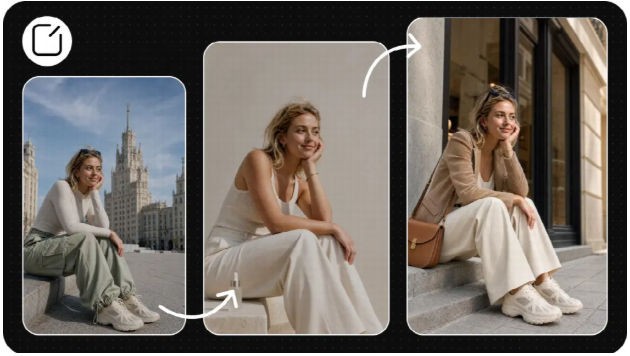

You want customers to recognize your brand, but your small team may not have a presenter available for every launch or post. An ai influencer can offer a recurring virtual host for product introductions and helpful explanations. Dreamina supports creating a character, reusing its visual reference, and developing images or videos around new offers.
For a small brand, the question is whether a familiar presenter makes your content easier to produce and more useful to customers. Start with the questions buyers already ask, then give the character a role that helps answer them.
Does the brand need a recognizable host or simply better product images
Not every product post benefits from a presenter. A clear photograph, useful comparison, or close view of an important feature may answer the buyer’s question directly. If the information is hard to see, adding a face can reduce the space available to show it.
A virtual ambassador becomes more relevant when the brand needs a continuing voice around several pieces of content. The host can introduce why an item exists, orient someone within a range, or deliver short explanations that would otherwise appear as unrelated announcements.
This may suit a founder who prefers working behind the scenes or a shop whose visual identity changes with every new template. The character supplies a recurring point of recognition while the product and message change. It should not be expected to create a distinctive brand where the offer itself remains unclear.
Ask what the host will contribute to the next few planned posts. If there is a useful role beyond standing beside the product, the idea deserves exploration. If every appearance would say little more than a repeated invitation to buy, improve the content proposition before designing the persona.
What customer problem would the ambassador help explain
Product communication often becomes difficult when a business knows its range too well. Details that seem obvious internally may be unfamiliar to a buyer. A host can structure those details around an approachable question instead of presenting another dense specification list.
The most useful questions concern a real decision: choosing between options, understanding a use, preparing for an occasion, or identifying an appropriate next step. Select one that the brand can answer accurately. A virtual character does not remove the need for someone who understands the product.
Keep the presentation tied to available evidence. A fictional ambassador can introduce a feature or narrate an explanation. It should not be presented as a real customer describing a purchase, a personal result, or an independent review. Those are different sources of persuasion that require a genuine basis.
Use actual product material when precision matters. A generated scene can provide atmosphere or illustrate a context, while a verified image or recording shows the detail the buyer needs to inspect. The host can connect those sources without pretending that its appearance proves the product’s performance.
Why might a virtual host fit a small production team
Small businesses often create content in the time between other operational tasks. A shoot may require a presenter, location, light, suitable clothing, and another session when the offer changes. A reusable character provides a different starting point for prepared promotional work.
The appeal is flexibility in scheduling, not an automatic guarantee of lower total cost. The business can prepare the message and visual brief when information is ready, then generate and review candidates without requiring the founder to record each version. Corrections and approval still need time.
The tool can establish a character from a written description or permitted reference photo and retain the chosen design for later scenes. This helps separate the recurring identity from the current campaign. The ambassador can remain familiar while the business changes what it needs to explain.
Start with one complete piece before expanding the role. Include writing, product-source preparation, generation, correction, and layout. Compare that process with the approach the team would otherwise use. A useful pilot reveals whether the host actually makes ongoing production more manageable.
Can the same character support new offers without becoming repetitive
Recognition and repetition are different. A familiar host can guide several topics, but a new outfit does not by itself create a new message. Decide what the audience receives from each appearance before choosing another background or pose.
The product workflow supports editing outfits, products, and locations around a virtual character. Those changes can place the same ambassador within different promotional treatments. Check the resulting appearance and the featured product rather than assuming that an approved reference guarantees an accurate variation.
An effective content mix might combine a brief introduction, a useful explanation, and a response to a recurring buyer question. Their visual treatment can differ according to their job. The ambassador provides continuity without requiring identical captions or compositions.
Visual variation should reflect what the post is doing. A direct explanation may benefit from a stable host and restrained background. A creative interpretation can allow a more expressive scene. A comparison may need a layout where relevant differences are easy to inspect.
Decide which identity features stay stable across that variation. The character’s defining appearance and general tone can remain recognizable while clothing, setting, and framing change. Record those choices so each production does not start by reinventing the persona.
The platform supports saving a selected character for reuse and generating new content around that reference. Its editing workflow can also change outfits, products, or locations. These functions give a production route for planned variety, with each output still checked for the features that establish the host’s identity.
Treat trend-inspired movement as one possible format, not the whole strategy. Supported motion references can guide movement and rhythm in a new clip. Choose trends that can carry the account’s subject or voice. A popular structure that has no connection to the editorial promise may produce attention without establishing a reason to return.
Where can images and spoken video help the buyer
A still image is useful when the buyer needs to inspect a composition or read concise information at their own pace. A spoken clip can introduce a question, guide attention, or explain the relationship between several details. Choose the format according to the information rather than the perceived novelty of animation.
The platform can develop character-based video and use supported motion references to guide performance. Talking-avatar options also provide a route from a portrait and approved script or audio to a prepared presenter segment. That is useful when the brand needs a repeatable introduction without a new personal filming session.
Keep gestures and expression related to the message. A lively performance may suit a launch, while a calm comparison may need less movement. Review wording, pronunciation, lip movement, and the product presentation together. A polished character performance can still distract from the buyer’s actual question.
The ambassador does not have to remain visible throughout a clip. Let close product views or genuine demonstrations take over where they communicate more clearly. A host earns its place by making the content easier to follow, not by occupying every frame.
What should stay under human control
Someone in the business needs to own the offer, factual claims, and customer response. A virtual host can present approved material, but questions about availability, suitability, or a real order still need a dependable route to the business itself.
Give the persona an understandable fictional role. It may be the brand’s virtual guide or ambassador, with a distinctive voice and appearance. Avoid invented qualifications or personal-use claims intended to make the character seem independent of the brand it represents.
Keep product details and exact wording editable where practical. Prices, dates, and conditions change more often than the character’s face. The production process should allow a correction without reconstructing an entire identity or accidentally returning to an obsolete offer.
For a small team, a short shared record can be enough: approved character reference, public role, current product sources, and the person who approves final messages. The purpose is continuity and accuracy, not an elaborate fictional biography nobody uses.
How can the business judge whether the role is worthwhile
Consider the customer’s route beyond the post. A useful ambassador can direct attention to a relevant product page, comparison, or real support channel. That destination needs to deliver the information the introduction promised. A recognizable host adds little if the next step leaves the buyer confused about the item, its conditions, or how to ask a practical question.
Review the first pieces according to the job the ambassador was meant to do. Is the product easier to understand? Does the account feel connected across posts? Can the team produce another useful piece without the presenter becoming its largest ongoing task?
Separate those observations from claims about sales or audience growth. A clear explanation can be useful even before a business has enough comparable performance data. If results are tested later, record the actual offer, audience, and placement rather than attributing every change to the presence of the virtual host.
Notice which formats need the character and which do not. The best outcome may be a limited recurring role rather than a complete shift of the brand’s content. Retain real product images, genuine expertise, and ordinary communication wherever they serve the customer better.
A virtual ambassador makes sense when it gives a small brand a useful public voice around real products. It can connect launches and explanations while leaving the people behind the business free to choose when they appear. The role succeeds through what it helps customers understand, not simply through the novelty of its face.
Read More From Magazinepanda