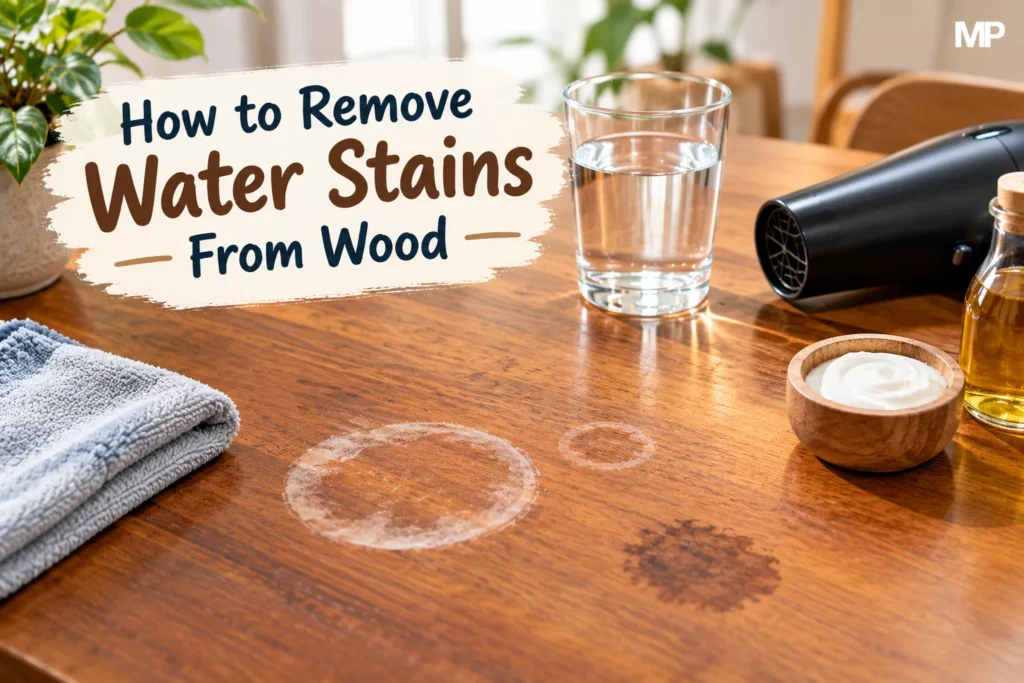

Water stains can make a beautiful wooden table, desk, cabinet, or dresser look damaged almost overnight. A cold glass, wet cup, plant pot, or small spill can leave behind a cloudy white ring or a much darker mark. The good news is that many light water stains are not permanent, especially when the moisture is trapped in the finish rather than the wood itself.
The right treatment depends on the appearance of the stain and the condition of the finish. White or cloudy rings are usually easier to treat, while dark brown or black marks can indicate that moisture has reached the wood underneath the protective coating. Starting with the gentlest method can help you avoid unnecessary damage.
Quick Info
| Detail | Information |
| Topic | Removing water stains from wood |
| Common cause | Spills, condensation, wet objects, or moisture |
| White/cloudy ring | Often moisture trapped in the finish |
| Dark or black stain | May indicate deeper penetration into the wood |
| First approach | Use the gentlest suitable method |
| Common methods | Hair dryer, low heat, mayonnaise, vinegar, baking soda and other treatments |
| More serious stains | May require sanding or refinishing |
| Important precaution | Test any treatment in an inconspicuous area |
| Best prevention | Coasters, quick cleanup and suitable furniture protection |
Why Water Leaves Marks
Wood furniture is normally protected by some type of finish. Depending on the piece, that finish may include lacquer, varnish, wax, oil, or another protective coating.
When moisture sits on the surface, it can interact with that finish. A cold glass can create condensation, and that moisture may become trapped beneath or within the upper finish layer. This can produce the familiar white, cloudy, or hazy ring seen on tables and other furniture.
A darker mark is different. When water passes through the finish and reaches the wood itself, the resulting discoloration can be much more difficult to remove.
That is why identifying the stain first is more important than immediately choosing a cleaning product.
White vs. Dark Water Stains
The easiest way to decide what to do is to look closely at the color.
White or light-colored marks usually suggest that moisture is trapped in the finish. These stains are often surface-level and may respond to gentle heat, oil-based household treatments, or carefully controlled cleaning.
Dark brown, gray, or black marks can mean that water has penetrated deeper into the wood. In these cases, simple surface treatments may not be enough. Sanding, bleaching, or refinishing may eventually be necessary.
This distinction can save you from making a common mistake: using an aggressive treatment on a stain that could have been removed with a much gentler method.
Start With the Gentlest Method
Before trying anything abrasive, clean the surface with a soft, dry cloth.
If the spill is fresh, remove as much moisture as possible without rubbing aggressively. Allow the area to dry naturally and inspect it again.
For a fresh white ring, you may not need a complicated treatment at all.
If the mark remains, move gradually from gentle methods toward stronger ones.
Do not try several treatments at the same time. Give one method a reasonable opportunity to work, then clean and dry the surface before deciding what to try next.
Use a Hair Dryer
A hair dryer can be a useful first treatment for some white or cloudy water rings.
The basic idea is to apply gentle heat to the finish and encourage trapped moisture to leave.
WoodCentral’s current 2026 guidance recommends using a hair dryer at moderate heat, holding it several inches from the surface, and keeping it moving rather than concentrating heat in one location.
Start with a low or medium setting.
Hold the dryer several inches above the mark and move it continuously across the affected area.
After a short period, stop and inspect the surface.
Never leave concentrated heat on one spot. Excessive heat can damage some finishes, so patience is more important than temperature.
Try a Warm Iron Carefully
Another commonly recommended technique uses an iron and a cloth.
This method needs more care because direct heat can damage or soften certain finishes.
Place a clean cotton cloth over the affected area. Use the iron on a low or moderate setting and move it briefly over the cloth.
Check the stain frequently.
This Old House’s June 2026 guidance specifically recommends placing a rag between the iron and the wood and checking the stain frequently because too much heat can melt the finish. Its contractor also notes that this technique is more suitable for some oil-based or lacquer finishes than water-based finishes.
Never place a hot iron directly on finished wood.
If you are unsure what finish your furniture has, a less aggressive approach is safer.
Try Mayonnaise
Mayonnaise is one of the most familiar home remedies for white water rings.
The treatment is based on the oils and moisture in the product interacting with the affected finish.
Martha Stewart’s January 2026 guide includes mayonnaise among the household methods used for removing water stains from wood.
Apply a small amount to the affected area and allow it to sit before wiping it away with a clean cloth.
Because finishes vary, test the method in a hidden location first.
This is particularly important with older furniture, delicate finishes, veneers, and pieces with existing surface damage.
Petroleum Jelly Can Help
Petroleum jelly is another treatment discussed in recent wood-care guidance for white water rings.
The Spruce’s current guidance explains that petroleum jelly and similar oily household products can sometimes help with white rings by interacting with the moisture trapped in the finish. It also recommends testing the treatment first because some surfaces can react differently.
Use only a small amount.
Leave it on the affected area for the recommended period, then wipe the surface thoroughly.
If the wood looks darker or different after treatment, stop rather than repeatedly applying more product.
Vinegar Requires Care
Vinegar is another common household solution.
This Old House’s June 2026 guide demonstrates the use of regular-strength vinegar for ring stains, explaining that it can help break down mineral deposits associated with the mark.
Martha Stewart also includes vinegar-based treatment among its current recommendations.
However, vinegar is acidic.
That means it should not automatically be treated as safe for every wood finish.
Apply any vinegar solution carefully, use only a small amount, and test it somewhere inconspicuous first.
Avoid soaking the wood.
The objective is to treat the mark, not introduce more moisture into the furniture.
Baking Soda Needs a Light Touch
Baking soda appears in several established methods for dealing with wood ring stains.
This Old House’s current guide demonstrates creating a paste using baking soda and water.
The important word here is gentle.
Baking soda is mildly abrasive. Scrubbing aggressively can dull or scratch some finishes, especially softer or already-worn surfaces.
If you use a baking-soda paste, apply it carefully and avoid prolonged rubbing.
After treatment, remove the residue and dry the area.
What About Toothpaste?
Non-gel white toothpaste is another traditional suggestion for light water marks.
The attraction is simple: toothpaste can provide mild abrasive action that may help with some surface discoloration.
However, this does not mean it is suitable for every finish.
A glossy, delicate, antique, veneered, or already-worn surface can be more vulnerable to visible rubbing marks.
If you decide to try it, use a very small amount and test a hidden section first.
Never assume that a household remedy is harmless simply because it is common.
Use Olive Oil Only for the Right Purpose
Olive oil sometimes appears in water-ring removal instructions, but its role can be misunderstood.
This Old House’s demonstration uses olive oil after treating a ring stain to restore some of the surface’s appearance and shine.
It is not a universal solution for deep water damage.
If the stain has penetrated into the wood, rubbing oil over it will not reverse the underlying discoloration.
Use finishing or conditioning products only when they are compatible with the furniture and its existing finish.
When the Stain Is Dark
Dark stains require more caution.
If a water mark appears brown, gray, or black instead of white and cloudy, the moisture may have reached the wood itself.
At this stage, household surface remedies may have limited results.
This Old House’s updated 2026 guide separates dark stains from ordinary water rings and recommends more involved approaches for deeper discoloration.
Architectural Digest similarly explains that darker water marks can indicate moisture has reached the wood and may require sanding and refinishing.
Do not immediately start sanding simply because a stain looks serious. First determine whether the furniture is valuable, veneered, antique, or covered by a finish that could be easily damaged.
Sanding May Be Necessary
For a deep stain, sanding can eventually become part of the restoration process.
The basic idea is to remove enough of the affected surface to reach clean wood, then restore the finish so the repaired section blends with the surrounding area.
This is much more involved than removing a white ring.
You need to consider the thickness of the material, especially with wood veneer.
A veneer is a thin layer of real wood applied over another material. Aggressive sanding can go through it and create a much bigger problem.
For expensive, antique, sentimental, or thin-veneer furniture, professional restoration may be safer than experimenting.
Be Careful With Wood Bleach
Wood bleach can be used for some deep dark stains, including certain water-related discolorations.
However, this is not the same as using ordinary household bleach.
Specialized wood-bleaching products and procedures require careful handling, and the wrong product can change the wood’s natural color or damage the surrounding finish.
Recent woodworking guidance identifies oxalic acid wood bleach as one possible treatment for certain deep water stains, particularly after the finish has been appropriately addressed.
If you have never restored wood before, this is a point where professional advice can be worthwhile.
What If the Furniture Is Veneer?
Veneer deserves special attention.
A veneer can look exactly like solid wood from the outside, but its decorative wood layer may be relatively thin.
That means aggressive sanding is risky.
Start with the least invasive treatment possible.
Avoid repeatedly rubbing one small area with abrasive materials because you could remove the finish unevenly.
If the piece is valuable or the stain is deep, a furniture restoration professional can determine how much material can safely be removed.
What If the Wood Is Antique?
Older furniture should not automatically be treated like a modern dining table.
Antique pieces may have historic finishes, wax coatings, shellac, lacquer, or previous repairs.
A modern cleaning method can change the appearance of an old finish even if it successfully reduces the stain.
Preserving the original finish may be more important than making the water mark disappear completely.
If the furniture has significant monetary or sentimental value, consider getting professional restoration advice before applying vinegar, heat, abrasives, bleach, or other treatments.
Always Test First
This is one of the most important rules in wood care.
Before applying any treatment to the visible stain, find a hidden area underneath the furniture or somewhere that is normally not visible.
Apply a tiny amount.
Wait and inspect the result.
Look for changes in:
- Color
- Gloss
- Texture
- Stickiness
- Cloudiness
- Finish condition
Martha Stewart’s current wood-cleaning guidance specifically recommends testing stain-removal methods in an inconspicuous location because different finishes and wood types can react differently.
Avoid Excess Water
It may sound strange to discuss water while trying to remove a water stain, but adding more moisture is not the answer.
Wood furniture should not be soaked during routine cleaning.
Martha Stewart’s January 2026 furniture-care guidance recommends using a damp—not wet—microfiber cloth for general cleaning and drying the surface so water does not remain on the wood.
This same principle applies to stain removal.
Use the minimum amount of liquid necessary.
Don’t Scrub Too Hard
A water ring can be frustrating, especially when it refuses to disappear.
That frustration often leads people to scrub harder.
Unfortunately, aggressive rubbing can damage the finish and leave a dull patch that is more noticeable than the original stain.
Use controlled, gentle movements.
If the mark is not improving, stop and reconsider the type of stain rather than increasing pressure.
How to Prevent Water Rings
Prevention is easier than restoration.
Use coasters under cold drinks, glasses, mugs, and bottles.
Place protective mats under plant pots and objects that may collect condensation.
Clean spills promptly.
Avoid leaving wet towels or damp objects directly on wooden furniture.
For dining tables and frequently used surfaces, consider a suitable protective finish or furniture-care product that is compatible with the existing surface.
The best time to prevent a water ring is before the glass touches the table.
Why Cold Drinks Cause So Many Rings
A cold drink does not have to spill to damage the appearance of a wooden table.
Condensation forms when the cold surface of a glass causes moisture from the surrounding air to collect on the outside.
That water runs toward the bottom of the glass and can sit directly on the furniture.
If the surface is not adequately protected, the moisture can interact with the finish and create the familiar circular mark.
This is why coasters are particularly useful for cold drinks.
A Simple Decision Guide
If you are unsure what to try, use this basic progression.
White and cloudy: Start with gentle drying or controlled heat.
Fresh white ring: A hair dryer may be worth trying first.
Persistent white ring: Consider a carefully tested household treatment such as mayonnaise or another suitable method.
Unknown finish: Test everything in a hidden location first.
Dark brown or black: Treat it as potentially deeper wood damage.
Deep stain on valuable furniture: Consider professional restoration before sanding or bleaching.
This approach is safer than applying the strongest treatment immediately.
When to Stop DIY Treatment
There is a point where experimenting becomes counterproductive.
Stop if the finish begins to look dull, sticky, cloudy, lighter, darker, or uneven.
You should also stop if the stain appears to be spreading or if you cannot determine what type of finish is on the furniture.
Professional help is particularly sensible for antiques, expensive furniture, valuable veneer, heavily damaged surfaces, or deep black stains.
Paying for restoration may be much cheaper than replacing a damaged piece.
Final Verdict
Learning how to remove water stains from wood starts with identifying the type of mark rather than immediately reaching for a cleaning product. White or cloudy rings are commonly associated with moisture trapped in the finish and can often respond to gentle methods such as controlled heat or carefully tested household treatments.
Dark stains are more complicated because they may indicate that water has passed through the finish and affected the wood itself. Those marks can require sanding, bleaching, or refinishing, and the risk is higher when dealing with veneer or valuable furniture.
The safest approach is to start gently, test first, avoid excess moisture, and stop before you damage the finish. If a simple method does not work, that does not necessarily mean you need a stronger chemical or more aggressive scrubbing. It may simply mean that the stain needs a different type of treatment.
FAQs
Can water stains be removed from wood?
Many light or white water rings can be reduced or removed, particularly when the moisture is trapped in the finish. Dark stains may be more difficult because the water can have reached the wood underneath.
What removes white water rings from wood?
Common approaches include controlled heat from a hair dryer or carefully used iron, as well as household treatments such as mayonnaise. Always test the chosen method on an inconspicuous area first.
Can vinegar remove water stains from wood?
Vinegar is used in some established wood-ring removal methods, including a method demonstrated by This Old House. However, finishes differ, so test the treatment first and avoid saturating the wood.
How do you remove a dark water stain from wood?
A dark stain may require more extensive restoration because the moisture may have penetrated the wood. Depending on the surface, treatment can involve sanding, wood bleach, and refinishing. Valuable or veneered furniture may be better handled by a professional.
Does toothpaste remove water rings from wood?
Non-gel white toothpaste is sometimes used as a mild abrasive for light marks, but it should be tested first. Excessive rubbing can dull or damage certain finishes.
How can I prevent water stains on wooden furniture?
Use coasters, wipe spills promptly, keep wet objects away from unfinished or vulnerable areas, and avoid leaving condensation on the surface. Regular gentle cleaning can also help maintain the finish.



Pingback: Tips for Choosing a Paint Color That Works for Your Home - magazinepanda.blog
Pingback: Modern Furniture: Styles, Materials, Features & 2026 Design Ideas - magazinepanda.blog
Pingback: Is Fiber Cement Siding Worth It? Costs, Benefits, Installation & Care